

The First Automatic Watch: The Invention That Revolutionized Watchmaking
Few inventions have had as much impact on watchmaking as the automatic watch. While many innovations improved accuracy or durability, the automatic winding mechanism fundamentally changed how people interacted with mechanical timepieces.
Today, automatic watches are among the most respected creations in horology. Millions are produced every year, and they remain highly valued by collectors and enthusiasts alike. Yet before automatic winding was invented, every mechanical watch required regular manual winding.
The development of the automatic watch transformed convenience, improved usability, and ultimately paved the way for an entirely new category of watch accessories, including modern watch winders.
Life Before Automatic Watches
Before the eighteenth century, all mechanical watches required manual winding.
Energy was stored in the mainspring, and once that energy was depleted, the owner needed to wind the watch again. Failure to do so would cause the watch to stop and require resetting.
Watchmakers long searched for a way to make a watch wind itself automatically through normal daily activity.
Abraham-Louis Perrelet and the First Self-Winding Mechanism

Around 1770, Swiss watchmaker Abraham-Louis Perrelet developed one of the
earliest known self-winding watch mechanisms.
His invention used the wearer’s natural body movement to generate energy and wind the mainspring.
A moving weight inside the watch responded to motion, creating a system that could maintain power without frequent manual winding.
Although primitive compared to modern movements, Perrelet’s invention established the core principle behind every automatic watch produced today.
Why Early Self-Winding Watches Did Not Become Mainstream
Manufacturing technology in the eighteenth century presented significant limitations.
Precision machining was still developing, and early self-winding systems lacked efficiency and reliability.
As a result, manually wound watches remained dominant for more than a century.
Nevertheless, Perrelet’s concept inspired future generations of watchmakers to continue refining automatic winding technology.
John Harwood and the First Commercial Automatic Wristwatch
The next major breakthrough came in 1923.

British watchmaker John Harwood introduced the world’s first commercially successful automatic wristwatch.
Harwood recognized that frequent use of the crown could lead to wear and damage. His goal was to create a wristwatch that could remain powered through everyday wrist movement.
His self-winding system attracted significant attention and laid the foundation for the modern automatic wristwatch industry.
By 1928, Harwood watches were being produced commercially and represented a major milestone in horological history.
The Rolex Rotor Revolution
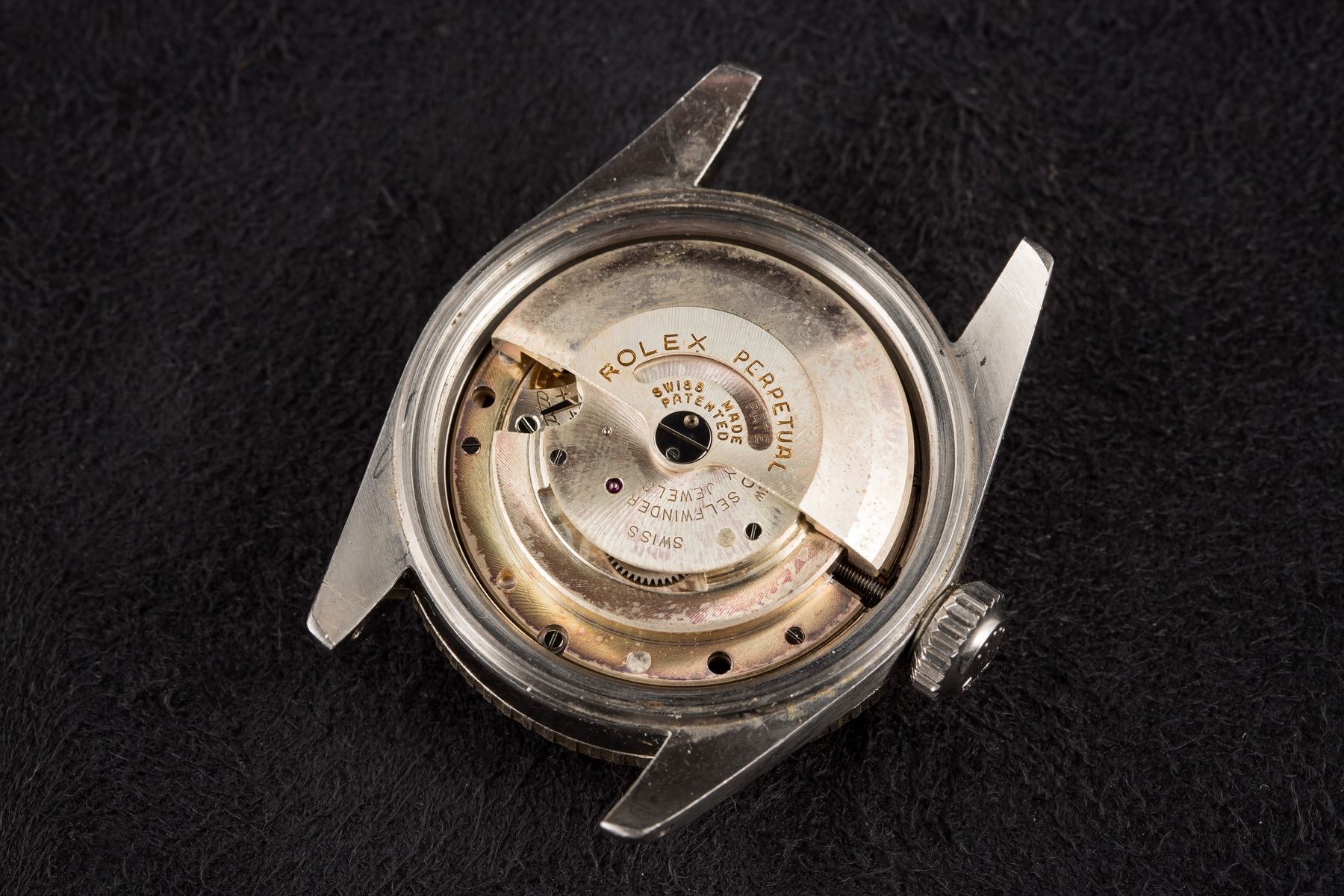
Although Harwood’s design was innovative, it still had limitations.
During the 1930s, Rolex introduced a full 360-degree rotating rotor system that dramatically improved winding efficiency.
This breakthrough became the foundation for virtually all modern automatic watch movements.
The basic principle remains unchanged nearly a century later.
Why the Automatic Watch Was So Important
- Greater Convenience
Owners no longer needed to wind their watches every day.
- Increased Popularity of Mechanical Watches
Automatic winding made mechanical watches more practical for everyday use.
- Improved Durability
Reduced crown manipulation helped minimize wear on certain components.
- A Platform for Future Innovation
Many advanced complications and luxury movements were later built around automatic calibers.
The Connection Between Automatic Watches and Watch Winders
One of the most significant long-term effects of automatic watch technology was the creation of the watch winder industry.
Because automatic watches rely on movement to remain wound, collectors with multiple watches often face the problem of stopped watches.
Watch winders were developed to solve this issue by simulating wrist motion when a watch is not being worn.
Today, they are a common accessory among luxury watch collectors worldwide.
The Legacy of the First Automatic Watch
More than 250 years have passed since Perrelet’s pioneering work, and more than a century has passed since John Harwood introduced the first commercial automatic wristwatch.
Yet the fundamental concept remains remarkably unchanged.
Every time a modern rotor spins inside an automatic watch, it reflects the same ingenious principle that first emerged in the eighteenth century.
The invention of the automatic watch represents one of the most important milestones in the history of horology.
From Abraham-Louis Perrelet’s early self-winding mechanism to John Harwood’s commercial wristwatch and Rolex’s revolutionary rotor system, each development contributed to the automatic watches we know today.
More than a convenience feature, automatic winding became a defining achievement mechanical engineering and remains at the heart of modern luxury watchmaking.